
How to Cook for One Person: The Complete Guide to Real Dinners Without the Waste
If you’ve ever searched for how to cook for one person and come up empty, or worse, found a recipe that starts with “serves 8,” you already know the problem. Every recipe out there feeds a crowd, nobody teaches you how to cut them down, and half the food ends up in the trash. We’re fixing all of that right now, and I mean all of it.
How to Cut Any Recipe Down for One or Two People
No math required. I promise. Here’s the plain and simple version.
Step 1: Just Cut Everything in Half First
Let me give you the easiest route: if you’re on my site, the serving sizes are adjustable within the recipe card. Adjust the number of servings, and you’re done!
If you’re on another site or in a cookbook, you will find that most recipes serve 4 to 6 people. The easiest thing you can do is just cut every ingredient in half. That gets you 2 to 3 servings – enough for dinner tonight and maybe lunch tomorrow. No calculator needed, just cut it in half.
If you only want one serving, cut everything in half, then in half again. That’s it. Don’t overthink it.
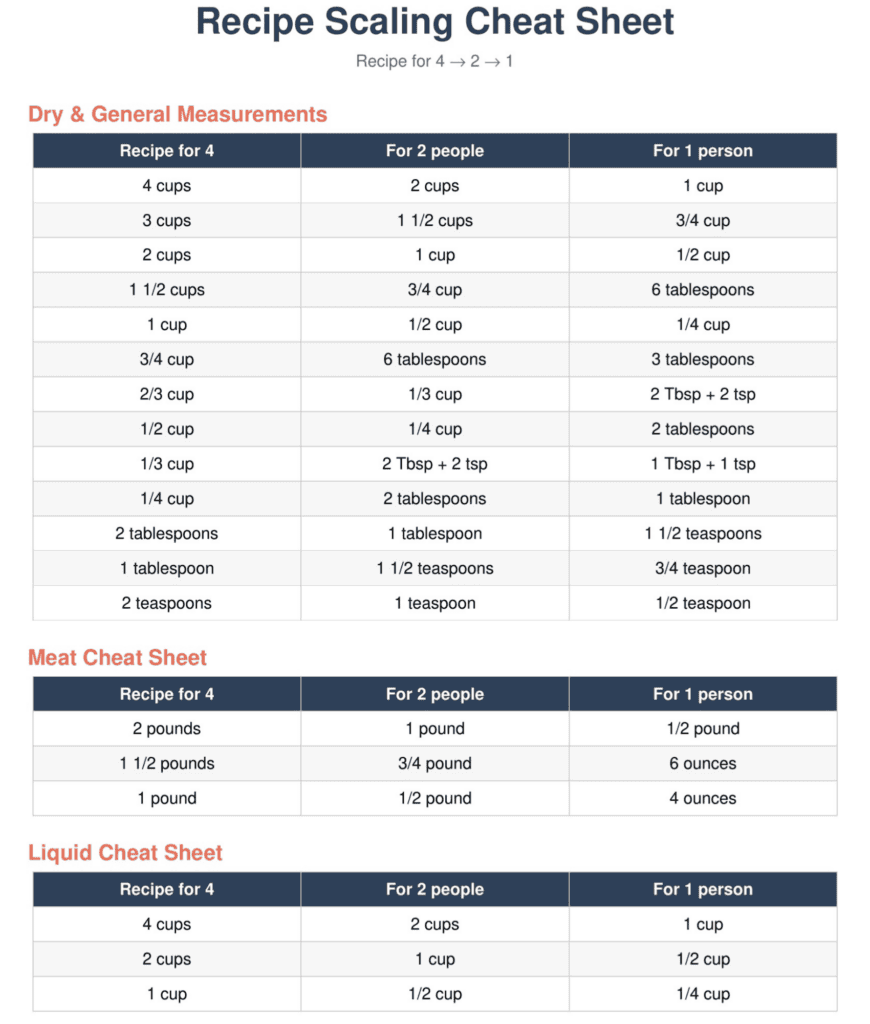
The “What’s Half of That?” Cheat Sheet
This is the only chart you’ll ever need. Print it out and tape it inside a cabinet door. Below is your entire scaling system.
Salt and Spices: Go Easy
Here’s the one thing that trips people up. When you’re making a smaller batch, spices hit harder, so don’t cut them by the same amount as everything else. Start with a little less than half, taste it, and add more if you need it. A smaller amount of food concentrates flavors more, so what tasted perfectly seasoned for 6 servings will taste way too salty for one serving.
You can always add more salt. You cannot take it away.
The Oven and Stovetop
Oven temperature stays the same. Don’t change it. Just check your food about 10 minutes earlier than the recipe says, because a smaller amount has less mass and loses heat faster, so it finishes quicker.
On the stovetop, things can cook a little faster. One chicken thigh cooks quicker than four. Less food in the pan means less heat is pulled away from it. Watch it instead of trusting the clock.
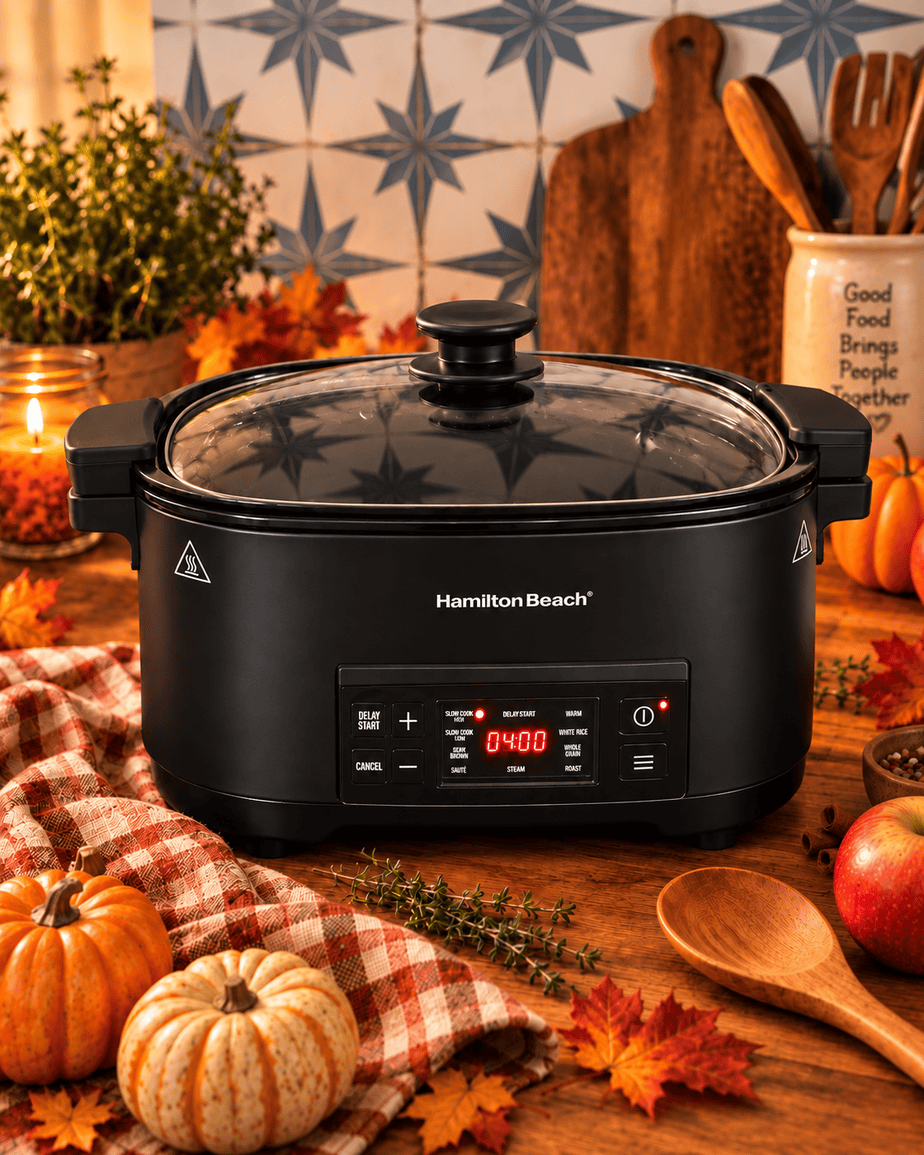
Slow cooker: Use a smaller one. A 2-quart slow cooker is perfect for one or two people because you get all the convenience of set-it-and-forget-it cooking without a week’s worth of leftovers. A slow cooker needs to be at least half full to cook properly, so if you’re only making one serving in a big one, it won’t cook properly and could dry out. If you only have a large slow cooker, make the full batch and freeze the leftovers in single portions. More on that below.
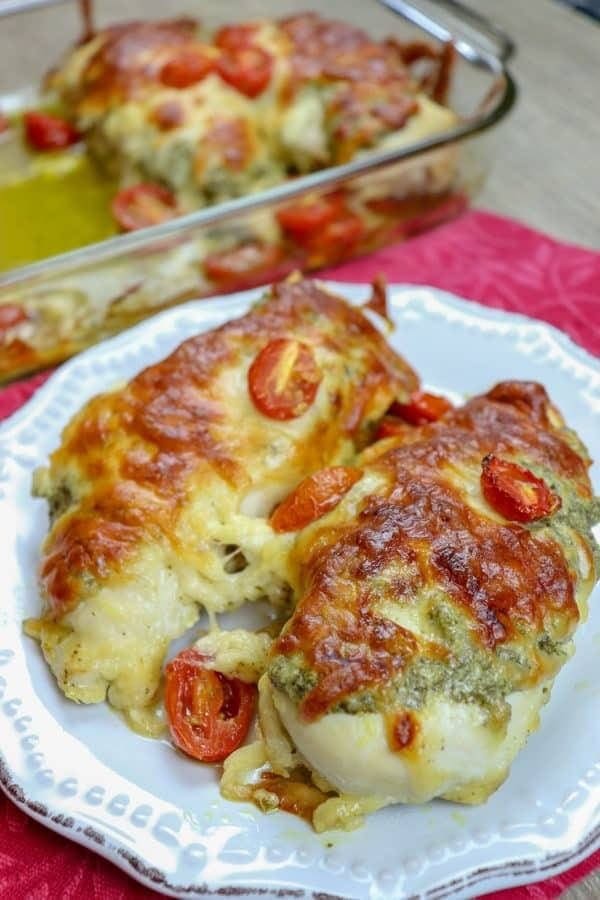
Baked pesto chicken is a great dish for one or two people.
Use the Right Size Pan
This one makes a big difference. If you put a small amount of food in a big pan, it spreads out too thin, dries out, and overcooks at the edges.
Simple rule: if the food barely covers the bottom of your pan, it’s too big. Switch to a smaller one.
- Halving a casserole? Use an 8×8 dish instead of a 9×13. The smaller dish keeps everything at the right depth so it heats through evenly and stays moist.
- Making just one or two servings? A loaf pan works perfectly. Yep, a loaf pan. It keeps a small amount of food compact and deep, so it cooks evenly and stays moist instead of drying out around the edges.
- One-person soup or stew? Use your smallest pot. More liquid surface area in a big pot means your soup reduces too fast and can go from soupy to too thick before you know it.
- Single-skillet dinner? Use an 8-inch skillet, not a 12-inch. In a too-big skillet, the exposed pan around your food scorches, and the drippings you want for flavor can burn.
What to Do About Eggs In The Recipe
You can’t cut an egg in half – it’s just not practical. Here’s what to do instead:
- Recipe calls for 1 egg? Just leave it in, even if you’re halving everything else. One egg in a smaller dish still does its job – holding things together and adding richness, without making it weird.
- Recipe calls for 2 eggs? Use 1. Works fine for casseroles, skillet meals, and most dinner recipes.
- Eggs are the whole point of the dish (like an egg bake)? Just make the full recipe and reheat the rest throughout the week.
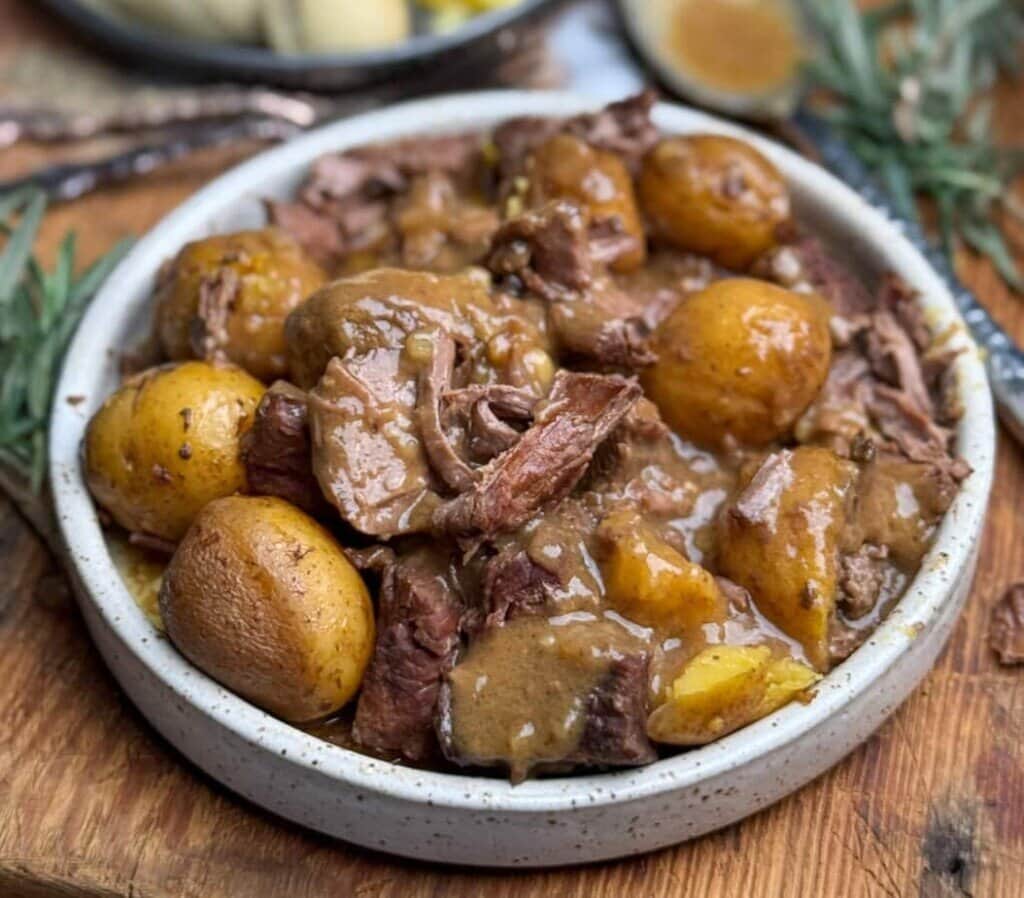
Slow Cooker garlic steak and potatoes is a great dish to lower the servings and cook in a 2-quart cooker.
Canned Goods
You can’t buy half a can of tomatoes or beans, and that’s okay. You have two options:
Option 1: Use the whole can and make a slightly bigger batch, enough for tonight and tomorrow. No waste, no math.
Option 2: Use what you need, put the rest in a small container with a lid, and refrigerate it. Canned tomatoes and beans last 3 to 4 days in the fridge once opened. Label the container with what it is, so you don’t forget.
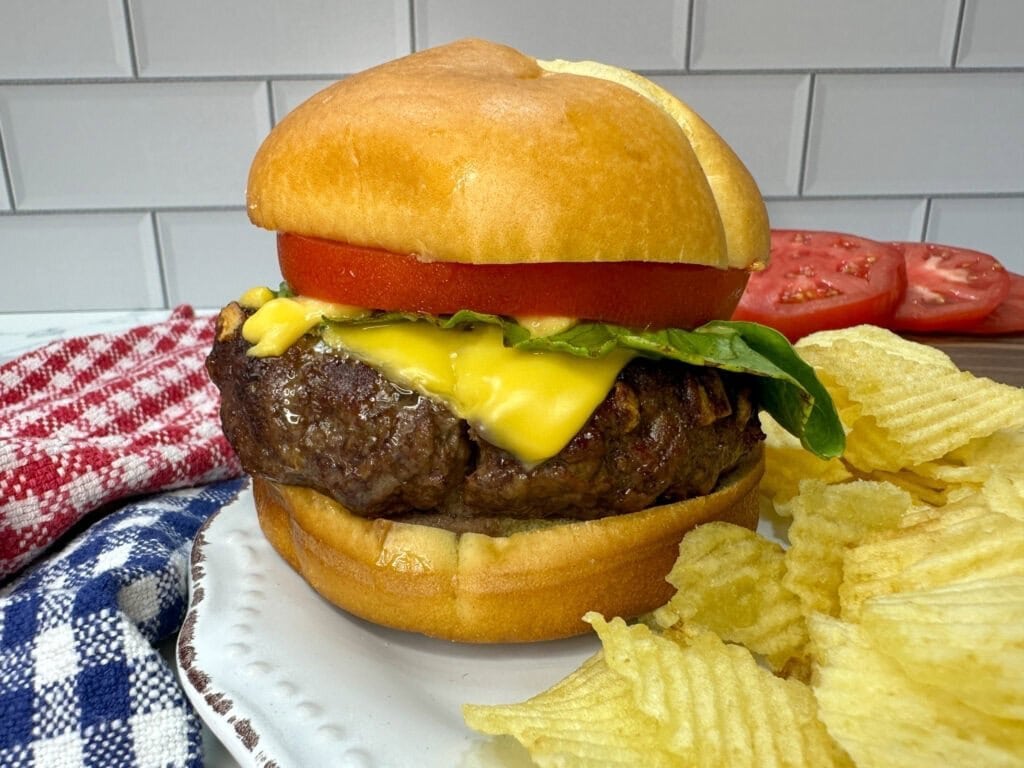
My air fryer hamburger recipe is great for one or two people. You can make two hamburgers with this recipe and freeze one for later. I like to freeze the burgers while they are still raw and then pull them out and thaw when I’m ready to cook them.
Which Recipes Work Best for One (and Which Don’t)
Knowing which dishes are naturally easy to cook for one, and which ones fight you, saves a lot of frustration.
Easy to Cook for One
Skillet meals are your best friend here. One chicken thigh, one pork chop, a handful of shrimp – you don’t even need to scale anything. Just cook what you need in an 8-inch skillet, and you’re done.
Soups and stews work both ways beautifully. Scale them down using the chart and tips above, or make a full pot and freeze single-serving portions. Either approach works, and this is one of the easiest meals to always have on hand.
Casseroles cut in half very well. Put a halved casserole in an 8×8 dish instead of a 9×13, and it comes out just right. Cream-of-something-based Southern casseroles are especially forgiving, and they’re hard to mess up even when you’re adjusting amounts.
Sheet pan dinners are some of the best dinner ideas for one out there. Just use one piece of meat and a cup or two of vegetables. Same temperature, same general time (check 5 minutes early). Dinner with almost no cleanup.
One-pot rice and pasta dishes scale down beautifully with the cheat chart. Just use a smaller pot and watch your liquid levels.
TIP: Using Crock Pots, toaster ovens, and air fryers is a great way to keep the heat out of the kitchen and use less electricity when cooking for one or two people. I will add that I didn’t have a great experience with a toaster oven/air fryer combo. I think they work better when they are separate appliances.

We make this 30-minute creamy beef soup recipe often. It’s a great meal to make and freeze.
Or give this slow cooker cheesy potato soup a try. If you have a small Crock Pot, you can make a smaller portion.
The Freezer System That Changes Everything
This isn’t just “freeze your leftovers.” This is a real system that means you always have dinner, even on the days you don’t feel like cooking, even when you’re tired, even when it’s raining, and you can’t get to the store.
Now, the freezer does have one little catch – you have to plan ahead enough to let things thaw. So while it’s not exactly grab-and-go, it’s pretty close once you get into the habit of pulling something out the night before.
The System (Five Steps)
Step 1: Pick one day a week. Sunday works well for most people. Make one big batch of something. A slow cooker meal, a pot of soup, a casserole. One dish, one day. (Do that for six weeks in a row, and you will have quite a lot of food in the freezer to just pull out and heat up).
Step 2: Eat one serving fresh that same day. Enjoy it. That’s your reward.
Step 3: Portion the rest into single servings right away, while it’s still warm. Don’t put the whole pot in the fridge and tell yourself you’ll deal with it later. Food portioned while warm seals better in bags and containers, and you’re far more likely to actually eat something that’s ready to grab than a big pot you have to dig into. I bought containers from Souper Cubes that freeze food well. You can get these or something less expensive on Amazon or at Walmart. I like Souper Cubes because you can freeze the leftovers and then add them to the baking dish, and they are the perfect size. You can also take the food right from the freezer and start baking it without waiting for it to thaw, but plan on the cooking time being longer.
Step 4: Label every single container with the dish name and the date. Be specific. Write “Chicken and Rice – April 3,” not just “chicken.” Two months from now, you won’t remember what that mystery container is.
Step 5: For soups and stews, portion them into individual containers right away, let them cool, and then put the lids on, and stack them in the freezer. Label each one with the name and date so you always know what you have. If you add them to the freezer immediately, steam will gather and add more ice inside, which can dilute it.
Bonus: Another great freezer trick is to cook a batch of ground beef or chicken thighs in the slow cooker, shred or crumble it, and bag it up in single-serving portions to freeze. (I will cook five pounds of ground beef or five pounds of chicken at a time and then bag them up in one-pound packs). When it’s time for dinner, the protein is already done. Just pull a bag out, thaw it, and add it to soup, rice, pasta, casseroles, or whatever sounds good that night. It cuts your actual cooking time down to almost nothing.
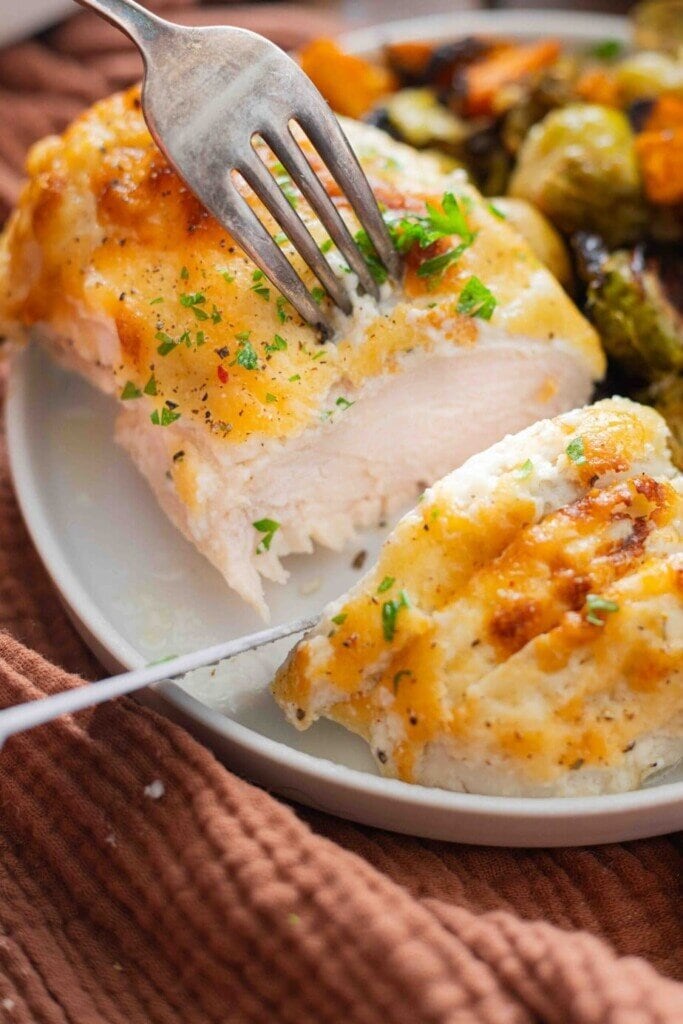
This baked chicken breast recipe is great for one or two. You can cut the recipe in half, and it still tastes amazing. And it only requires a few ingredients.
Smart Grocery Shopping When You’re Cooking for One
Shopping for one is genuinely a different skill from shopping for a family, and nobody really teaches it. Here’s what actually works.
Buy meat in bulk when it’s on sale, then portion it yourself. This is the single best tip for cooking for one on a budget. Buying in bulk is almost always cheaper per pound, and portioning it yourself means you only thaw exactly what you need, no waste, and no temptation to cook more than you want just to use something up. When you get home, separate everything into single-serving portions right away. Add one chicken thigh per bag, one pork chop per bag, and ¼ lb of ground beef per bag. Label each one with the date and freeze them flat. You’ve essentially created your own single-serving meat counter right in your freezer, stocked with exactly what you like.
Ask the meat counter. This is one of the most underused tricks there is. Most grocery store meat departments will sell you one pork chop, two chicken thighs, or one steak if you just ask. Not all stores advertise this, but the butcher will almost always work with you. Don’t be shy about asking, because it’s a completely normal request.
Choose frozen vegetables over fresh whenever possible. Fresh vegetables for one are almost impossible to use up before they go bad. You buy a whole head of broccoli and use two florets. A bag of frozen green beans, corn, peas, or broccoli is zero-waste. You pour out what you need, whether that’s a handful or a full cup, and zip the rest back up. No wilting, no throwing away half a head of broccoli at the end of the week.
Know which fresh produce lasts and which doesn’t. The safe bets that last weeks in the fridge: carrots, celery, and onions (2–3 weeks), cabbage (close to a month), and potatoes (weeks in a cool dark spot). Buy these confidently. The risky ones: leafy greens (3–4 days), mushrooms (4–5 days), berries (3–4 days). Only buy those when you have a specific plan to use them within a few days.
Buy broth in small cartons. Look for the 32-oz cartons instead of the big 48-oz ones, or even better, the individual 8-oz boxes – one box is exactly one cup, which is perfect for a small pot of soup or a cup of rice. No measuring, no leftover broth going bad in the fridge.
Lean hard on canned goods. Canned chicken, canned beans, canned tomatoes, cream of chicken soup – these are the backbone of easy meals for one. They last for years, they’re budget-friendly, and you use exactly as much as you need. Canned goods are not a compromise. They’re practical.
Use the salad bar. This is one of the best-kept secrets for cooking for one. Need just a handful of mushrooms for one dinner? A few strips of roasted red peppers? Two tablespoons of olives? The grocery store salad bar sells everything by weight. You pay for exactly what you take. It’s often much cheaper than buying a whole package you’ll never finish, and it cuts waste completely.
Freeze half your bread the day you buy it. As soon as you get home from the grocery store, put half the loaf straight in the freezer in the bag it came in. Slices go directly from the freezer into the toaster – no thawing needed. The bread is as good as the day you bought it, every single time.

When it comes to sides, you can make an entire pan of cornbread, slice it up, and freeze the portions. You can pull out one at a time and heat it up. This Jiffy cornbread recipe is moist, and it’s perfect for freezing.
Flavor Builders
- Cream of chicken soup: This is a Southern cook’s most reliable shortcut. It adds creaminess, body, and flavor to casseroles, soups, and gravies all at once.
- Canned diced tomatoes (14.5 oz)
- Chicken broth: small cartons or single-serve boxes.
- Garlic: fresh if you use it often, jarred minced garlic as backup. I honestly like the jar of minced garlic and keep it in my fridge.
- Yellow onion: once cut, lasts about 3 weeks in the fridge in a covered container, or cut up and frozen for several months.
- Butter
- Hot sauce
- Your go-to seasoning blend: Tony Chachere’s, Lawry’s Seasoned Salt, or whatever you’ve always loved. Don’t overthink it.
Freezer Staples
- Frozen vegetables – keep 2 or 3 varieties on hand
- A few frozen meals for genuine emergencies: not for every night, but for the days when you’re truly not up to anything else
For the Days You Just Don’t Feel Like Cooking
Y’all, those days happen. They happen to all of us. Some evenings you’re tired, you’re not feeling well, or you just don’t have it in you – and that’s completely okay.
That’s exactly what your freezer is for. Pull out one of those labeled bags or containers you made on Sunday, reheat it, and eat something real. Sit down at the table. Put it on a plate if you feel like it.
You deserve a good dinner even when it’s just for you because you are worth it!
Tips From Readers
Pj said to buy small eggs because they will help save money. She adds Worcestershire sauce to hamburgers and steaks to boost flavor.


Good tips. The only problem with the freezer is that you need to give whatever is time to thaw so it’s not really grab and go.
Added that in. Thank you!!
You have saved my life. I keep asking forgiveness for throwing food out that has gone bad because I couldn’t eat it fast enough. I get tired of eating the same thing day after day until it is all gone. Thank you so much!!
You are very welcome, Donnis! So glad this will help!!
hi Julie,
how do you cut eggs in half or quarter them? if the recipe calls for one egg, then you cut the recipe in half then half again, how do you do the egg?
thank you so much for all the really good recipes. you are one of my go to sites for delicious food.
thank you again
Great question! I actually cover this in the guide, but it’s easy to miss. The short answer: if the recipe calls for 1 egg, just leave it in, even if you’re cutting everything else down. One egg in a smaller dish still does its job. It’s not going to throw anything off. If the recipe calls for 2 eggs and you’re halving it, use 1. The nice thing is that eggs are very forgiving!
hi Julie,
I’m sorry I some how miss the section that you have about eggs. I call it brain fog.
do you have this cooking for one or two in a booklet form that we can get
Hi Christine, let me see if I can get this into a pdf for you! Give me a couple days.
Thank you so much for the great tips Julie…. As always you never disappoint….👍
Thank you so much, Cecile! You are so sweet!
Excellent advice for great meals and hardly any waste which is good for cheap people like me!
So glad to hear it’ll be helpful, Jeannie! Thanks for responding!
What a fantastic source you have created! Thank you so much for the time you put into making this information for us. It is truly appreciated!
You are very, very welcome!
Julie, this would be wonderful in PDF format. I want to print it out and make a book for my Mom with some of her favorite recipes ready (many are yours!) and that she can add to. it would also make great gift for someone newly single or just starting out! 💕
Hi Amy! Thank you so much for the sweet words!
I do have it in PDF form. Email me over at juliepollitt at backtomysouthernroots.com and I will send it over!
commenting about the egg idk exactly either. I’d like 2 say that I do have a few recipes that make smaller amounts
4 muffins etc 1 recipes told me 2 beat the 1 egg and remove two tablespoons of the egg otherwise the recipe was gonna b 2eggy .
idk if this will help someone or not but the muffins was good.
Hopefully it helps
Really enjoying your recipes.
Trying the skillet pot pie tonight. Did the Jiffy corn bread tamale pie last week. We loved it and had enough for a second night. Yum!!!
Thanks! Art
Hi Art! That’s great to hear! I am so glad you liked the tamale pie. I hope you love the skillet pot pie. Definitely one of my faves!
Love these Cooling for One tips! Thanks!
That’s so great to hear! I’m glad it’s helpful!
Can I make the same slow cooker recipes in the oven?
Hi Louise, You should be able to make all the slow cooker recipes in the oven. They may not require quite as much liquid, however. Are you planning to cook them at a higher temp to get them done faster?
Please send me the pdf for cooking for one. Love your recipes!
Thanks
Will do! And thank you!
Please send me the pdf for cooking for one
Done!